
The PDA Newsletter | Connor Hellebuyck Case Study
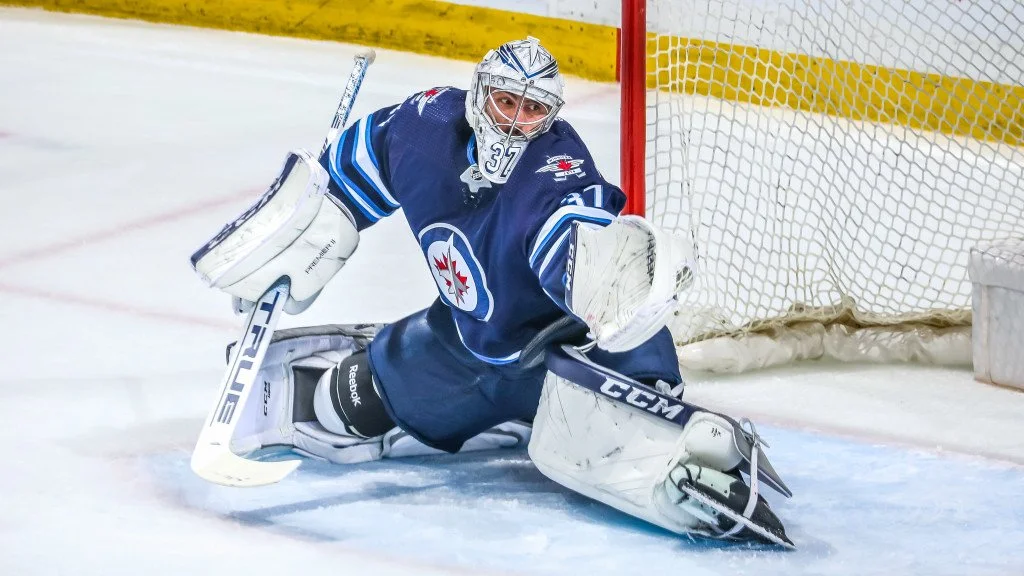
Curiosity. Discipline. Discovery.
When you don’t inherit a system, you build one.
Commerce Township, Michigan…
A living-room TV, a baseball glove, and a mini hockey stick.
Before he ever faced real shots, Connor Hellebuyck stood in front of the screen, copying the movements of Detroit Red Wings goalies.
His cousins played roller hockey in the driveway, and he joined them every chance he got.
His dad, Chuck, insisted the game stay simple; no pressure, no hectic travel schedule, no burnout. Have fun first…
Money and time ruled out the AAA circuit, so Connor played in a house league, then on AA travel teams.
That upbringing gave him something structure couldn’t: space to explore.
Without professional instruction, every question had to be answered by trial and error.
He learned by noticing; how pucks bounced, how angles changed, how movement felt when it was right.
He didn’t exactly have elite resources, but he did have curiosity.
And curiosity, as it turns out, can be a powerful development tool.
The Independent Study
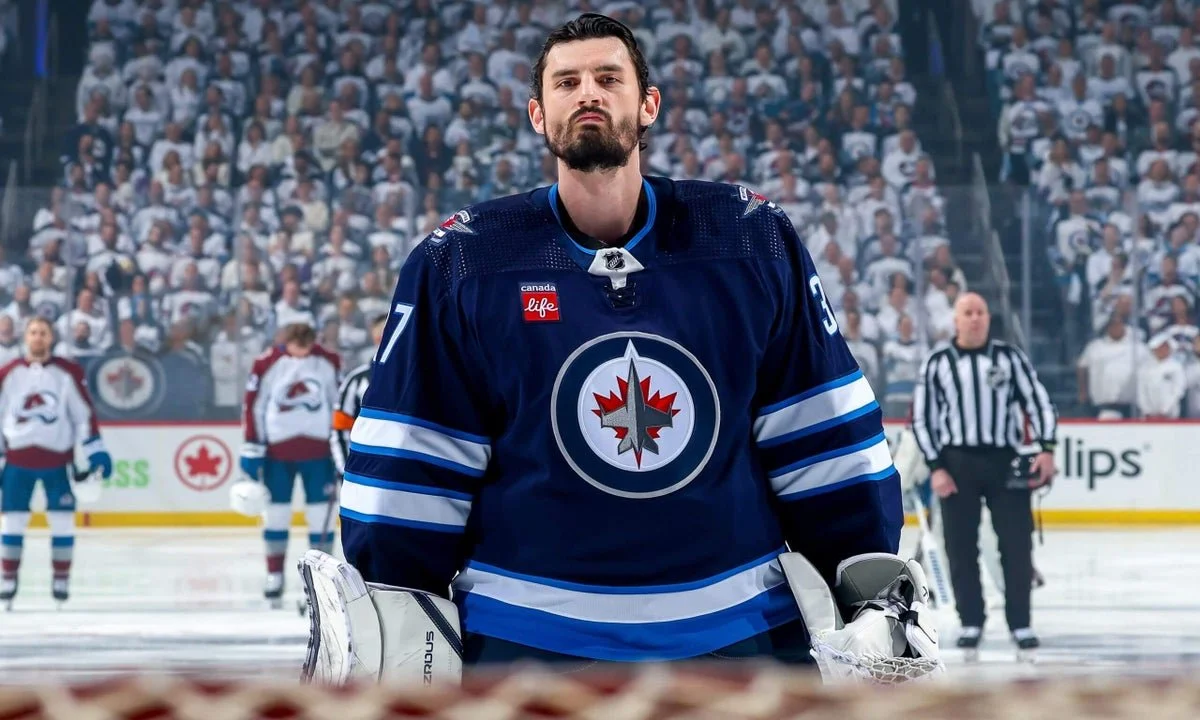
At Walled Lake Northern High School, Hellebuyck was a standout, but not a sensation…
Michigan high-school hockey wasn’t known for producing NHL goalies, yet that’s where his process began to solidify.
After each game he’d replay sequences in his mind, running cause-and-effect loops; where the play broke down, what cues he missed, and how to adjust next time.
He was teaching himself the language of performance analysis long before he’d ever see video of his own play.
That self-driven mindset carried him to the Odessa Jackalopes of the NAHL — a developmental league with long bus rides and little glamour, but a perfect laboratory for Hellebuyck to perfect his craft.
Every night offered new variables to test: rebounds, traffic, fatigue, timing.
He’s spoken about the challenge of those years, the long stretches without validation, but he never drifted from his goal…
He observed, adjusted, and kept refining the experiment.
The Lab at Lowell
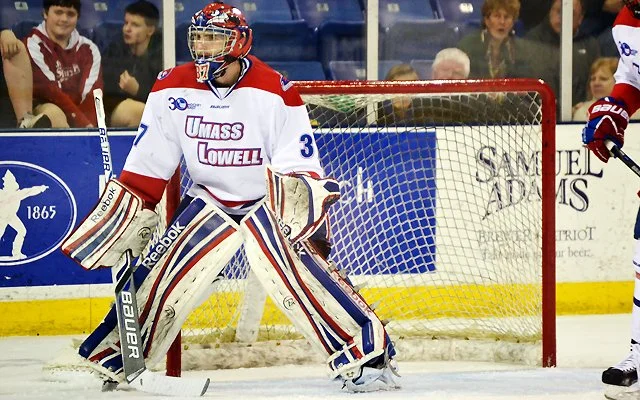
When UMass Lowell recruited him, it wasn’t just an arrival for Hellebuyck, it was an opportunity to refine the work and expand his foundation he built in Odessa.
Now he had structure: video rooms, goalie coaches, analytics. But he approached it the same way he always had, as a student in his own lab.
Film became his microscope…
He’d freeze frames to study glove tilt, stance mechanics, and depth control until patterns started to emerge.
“A lot of it was me learning things the hard way,” he said. “If I wanted to catch up, it had to come from studying and reps.”
– Team USA Hockey, “Connor Hellebuyck’s Unconventional Path to the NHL” (2020)
By his sophomore year, the data spoke for itself, a .946 save percentage and the Mike Richter Award as the NCAA’s top goaltender.
But the numbers only confirmed what he already knew: understanding creates control.
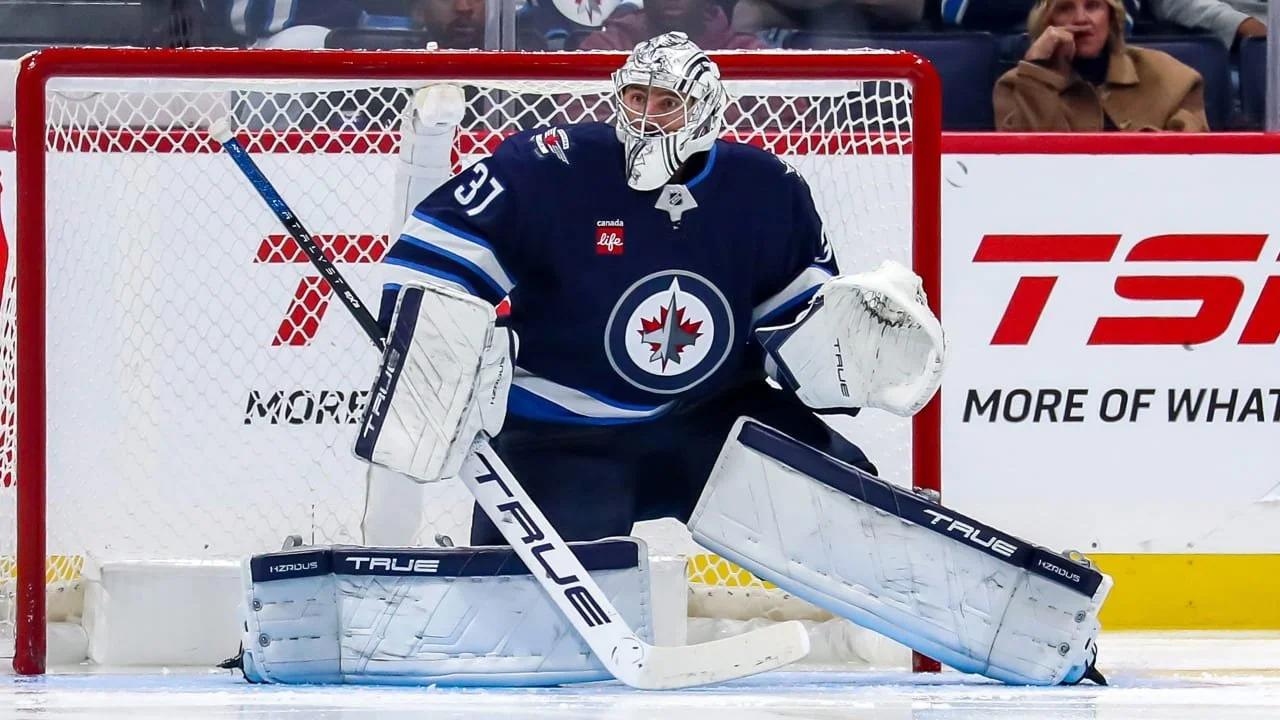
Backed By Science: Curiosity as a Catalyst
Research on deliberate practice from Dr. Anders Ericsson shows that mastery grows through self-analysis and constant adjustment — exactly how Hellebuyck trains.
Each rep is a micro-experiment: observe, adjust, retest, repeat…
Cognitive-science studies from Dr. Daniel Willingham adds that curiosity deepens learning by engaging reward circuits in the brain, improving pattern recognition and memory.
By seeking understanding instead of validation, Hellebuyck wired his brain for learning that lasts.
His calm under pressure that we all know him for today shouldn’t be considered detachment, but rather the confidence of someone who’s run the experiment a thousand times.
The Controlled Environment
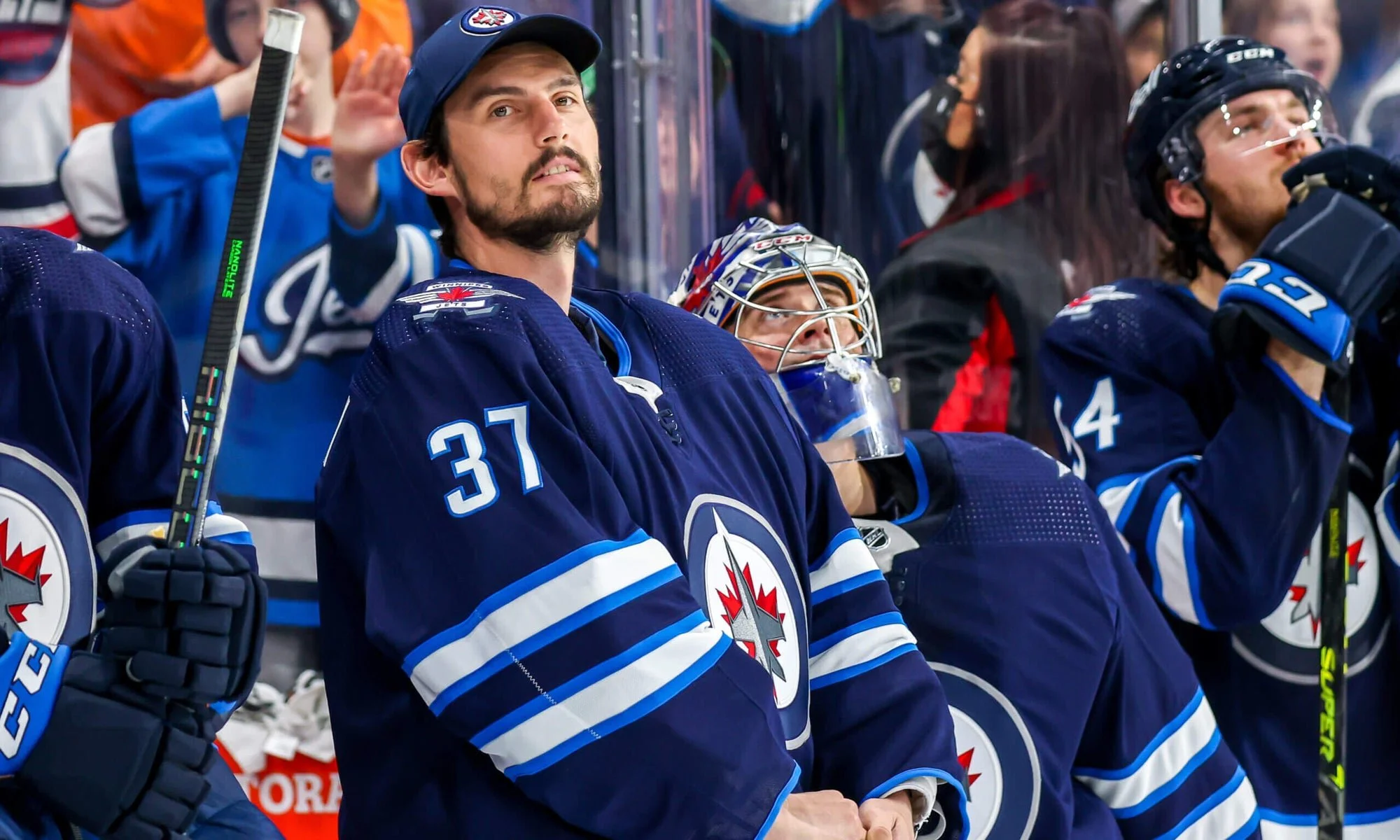
When the Winnipeg Jets drafted him 130th overall in 2012, it barely made a headline.
But he didn’t need one…
He treated the NHL the same way he treated high-school hockey; as another layer of observation.
With performance coach Adam Francilia, he refined the link between mind and movement: breath to posture, posture to tracking, tracking to recovery.
Each off-season became a research cycle, each game another dataset.
Control replaced chaos. Stillness became repeatable.
What most call instinct, he’s built through evidence, time and time again.

The Player He’s Become
By 2025, the results of his lifelong experiment were undeniable…
Three Vezina Trophies.
Two Jennings Trophies.
A Hart Trophy.
Largely regarded as the best goaltender in the league.
Franchise records in wins and minutes played.
But more telling than awards is how he’s viewed around the league; a model of precision without ego, a player whose preparation radiates calm, composure and focus.
“I’m not chasing expectations,” he said. “I just want to build my game the way it should be built.”
– Sportsnet, “The Big Read” by Ken Wiebe (2021)
That approach defines him…
Every season, every drill, every film session is another controlled trial in the ongoing study of his craft.
What Players Can Learn
Hellebuyck’s story shows that growth doesn’t require perfect conditions it requires observation. You can test, adjust, and refine no matter where you play.
Rewatch your shifts with questions, not judgments.
Treat mistakes like experiments, not verdicts.
Track what actually works for you, then refine it again.
Improvement isn’t found in answers.
It’s built through questions.
Actionable Advice
From roller-hockey driveways to NCAA arenas to the bright lights of an NHL crease, Connor Hellebuyck has lived one long experiment in attention and adaptation.
He never waited for instructions, he built understanding through constant curiosity.
He isn’t just a goaltender…
He’s hockey’s quiet scientist; always studying, always iterating, always learning.
And maybe that’s the real lesson:
Sometimes the best players aren’t always built by systems…
They design their own.
Talon Mills
