
The PDA Newsletter | Role vs. Identity

What happens when your kid stops being the player they once thought they were?
First-line minutes all season.
Power play reps.
Top of the stat sheet.
Maybe even the starting goalie.
Then January arrives.
A few quiet games.
A stretch where things don’t bounce their way during a key tournament.
A coach starts moving pieces around.
Suddenly, they’re on the third line.
Off the power play.
Watching more than playing.
The coach calls their name less.
The game feels farther away.
And without realizing it, something shifts.
This isn’t just about ice time.
It’s about identity…
The Moment It Becomes More Than Hockey
You’re driving them to practice…
The car is quiet in a way that feels heavier than anger.
You ask how they’re feeling.
They pause, then say something that lands deeper than you expect:
“I don’t know who I am out there anymore.”
They’re not talking about their spot in the lineup.
They’re talking about how they see themselves.
Because when a player grows up being
The scorer…
The shutdown defender…
The starter…
And that role begins to fade…
It can feel like they are fading with it.
Not from the game, but from themselves inside it.
Why Role Changes Cut Deeper Than We Expect
In adolescence, identity is still under construction.
At this age, players aren’t just learning systems or skills…
They’re learning who they are.
And in performance-driven environments like hockey, identity often forms around feedback:
Ice time.
Touches.
Production.
Praise.
Over time, something subtle happens.
“I play hockey” becomes
“I am a hockey player.”
And even more narrowly:
“I am my role.”
So when that role changes, the mind doesn’t read it as a tactical shift.
It reads it as a threat.
Not to confidence.
To belonging.
To value.
To self-worth.
That’s why a role change doesn’t just frustrate a teenager…
It destabilizes them.
Not because they’re fragile, but because their identity has become narrow.
The Real Risk: When Identity Becomes Too Small
High-level sports reward commitment.
Focus.
Sacrifice.
But there is a hidden cost when identity becomes singular.
When a young athlete defines themselves almost entirely through their role, they become vulnerable to anything that disrupts it.
A slump.
A benching.
An injury.
And when that identity is threatened, what follows often isn’t just disappointment.
It’s anxiety.
Burnout.
Emotional volatility.
Fear of failure.
A constant need for validation.
Not because they care too much.
But because they’ve been taught that this is the only place they matter.
A Reminder From The Pros
At the highest level, can roles disappear too.
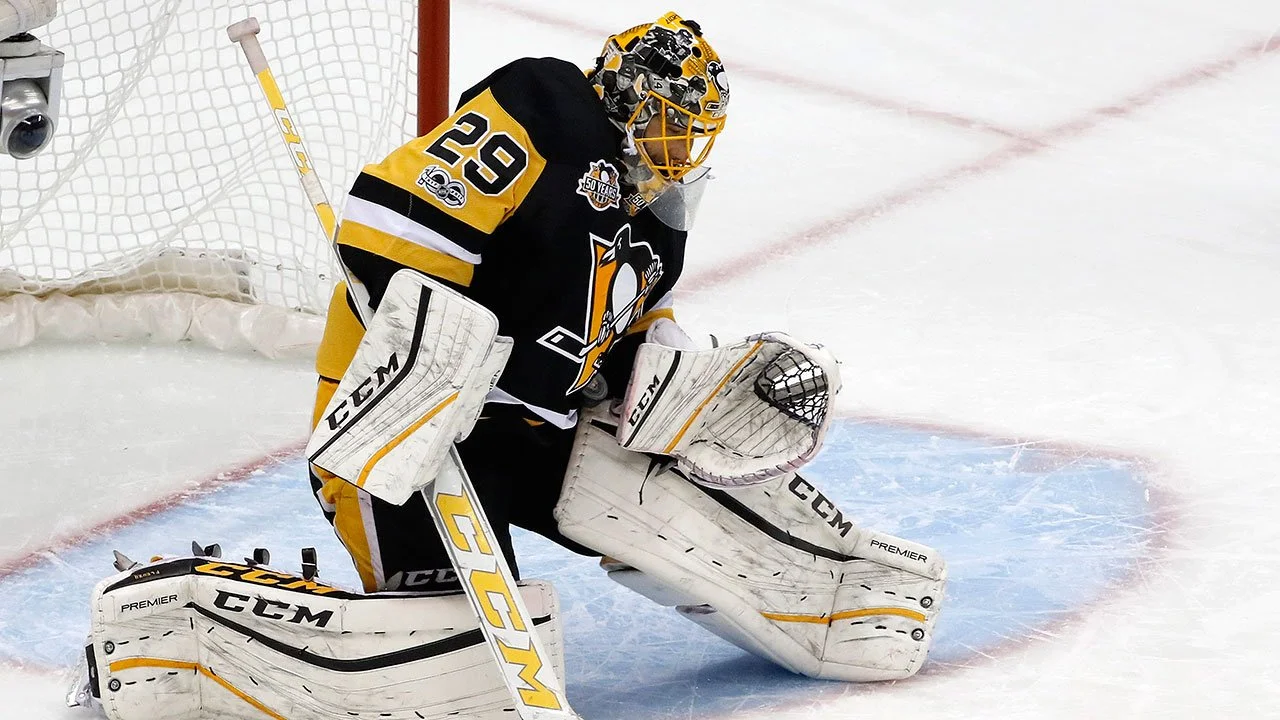
Marc-André Fleury went from being Pittsburgh’s franchise goalie to watching playoff games from the bench as a younger teammate took the net.
He didn’t retreat into frustration.
He became a presence. A teammate. A professional.
When his number was called again, he was ready.
Fleury didn’t stay valuable because he stayed the starter.
He stayed valuable because his identity was never just “the starter.”
Sometimes identity isn’t challenged by losing minutes or starts, it’s challenged by losing belief.
Cole Caufield was sent to the AHL as a 20-year-old phenom after struggling early in the NHL.
He didn’t treat it as a sentence.
He treated it as a healthy reset.
He worked. Rebuilt confidence. Refined his game.
And returned stronger, not just as a scorer, but as a professional.
Not “I score goals.”
“I prepare. I respond. I grow.”
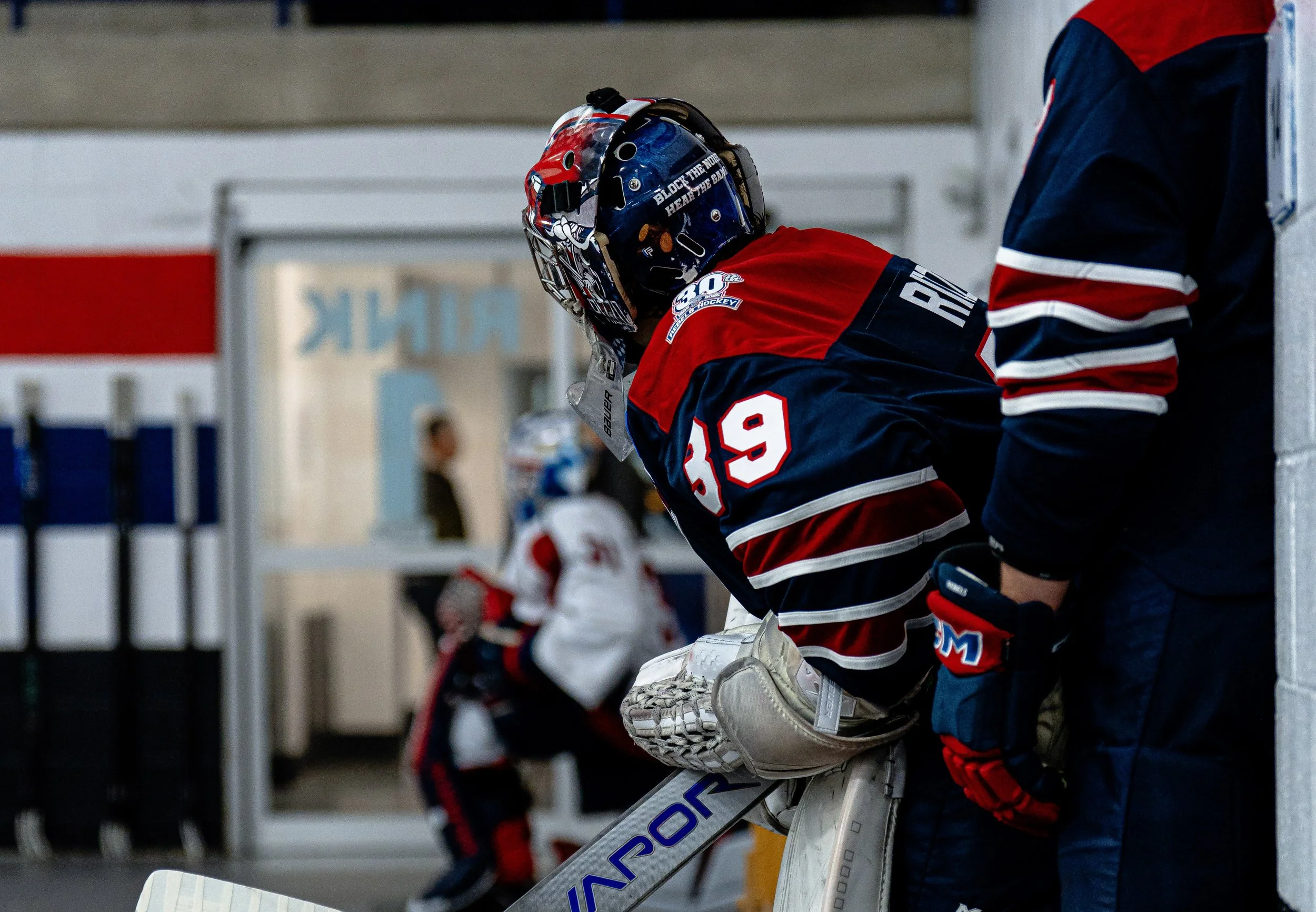
Why Being Benched Feels Like Rejection
To adults on the outside looking in, benching might feel like:
A teaching moment.
A tactical move.
A disciplinary choice.
To a teenager, it often feels like something else entirely:
Exclusion. A shot to their ego.
Young athletes don’t interpret benching as a strategy.
They interpret it as a message about where they stand.
And at this age, where you stand socially matters just as much as where you stand on the ice.
That’s why a player sitting on the bench isn’t just waiting for a shift.
They’re wondering:
“Do I still belong here?”
“Do they still believe in me?”
“Does my team still see me the same way?”
This is the work of development.
Quiet. Uncomfortable. Necessary.
Where Parents Accidentally Narrow Identity
When this happens, your instinct is to protect.
So you say:
“That coach doesn’t know what he’s doing.”
“You’re better than half that lineup.”
“You should be playing more.”
It sounds supportive.
But here’s what it teaches quietly:
That worth still lives in ice time.
That value is still tied to comparison.
That confidence comes from restoring the role, not growing beyond it.
It doesn’t stabilize identity.
It actually shrinks it.
Because now the only way your child feels okay again is by getting back what they lost.
That isn’t resilience… that’s confidence that only survives when the conditions are perfect.
Highly unsustainable behavior.
What a Durable Identity Looks Like
At the highest levels, players stop thinking in terms of:
“What’s my role?”
And start thinking:
“How do I impact the game no matter where I’m slotted?”
Because impact scales.
Across lines.
Across coaches.
Across systems.
Across seasons.
This is where identity shifts from role-based to character-based.
From:
“I’m a power-play guy”
to
“I’m a competitor.”
From:
“I’m a top-line player”
to
“I make any line better.”
From:
“I need minutes to matter”
to
“I bring value every shift I touch.”
That mindset shift is everything.
Because roles can fluctuate…
But identity is what remains when the game takes something away.
What Builds an Identity That Survives Change
The most adaptable players don’t anchor confidence in their deployment…
They anchor it in things that travel:
Compete level
Work ethic
Coachability
Hockey IQ
Emotional control
Leadership
Details
Reliability
These aren’t role-dependent.
They are identity-defining.
And when a player believes:
“This is who I am, regardless of where I play,”
They stop waiting to matter and start creating value wherever they can on the ice.
That is development in its purest form, but it takes maturity to arrive there.
The Identity Shift That Changes Everything
So what happens when your kid stops being the player they thought they were?
They reach a fork in the road.
They can cling to a fading role…
Or they can evolve into a deeper version of themselves.
From role-based identity to character-based identity.
From chasing permission to creating real impact.
And you help shape that transition.
Not by restoring their role.
But by expanding their identity.
Because no system can take that away.
Final Thought
The danger isn’t that your kid loses a role…
It’s that they lose themselves inside it.
And the opportunity isn’t getting that role back.
It’s helping them become someone who can thrive in any role that comes next.
That’s what development looks like when it’s built to last.
And that’s the identity worth protecting.
Talon Mills
