
The PDA Newsletter | Focus Like a Pro
The Sidney Crosby Standard

What separates the players who show up every night from the ones who disappear when it matters most?
Since breaking into the NHL in 2005, Sidney Crosby has been the gold standard of consistency.
From his highly anticipated rookie season to his role as captain of Team Canada, his reputation hasn’t changed: coaches trust him in every situation.
It’s why he’s still an all-world talent two decades later…
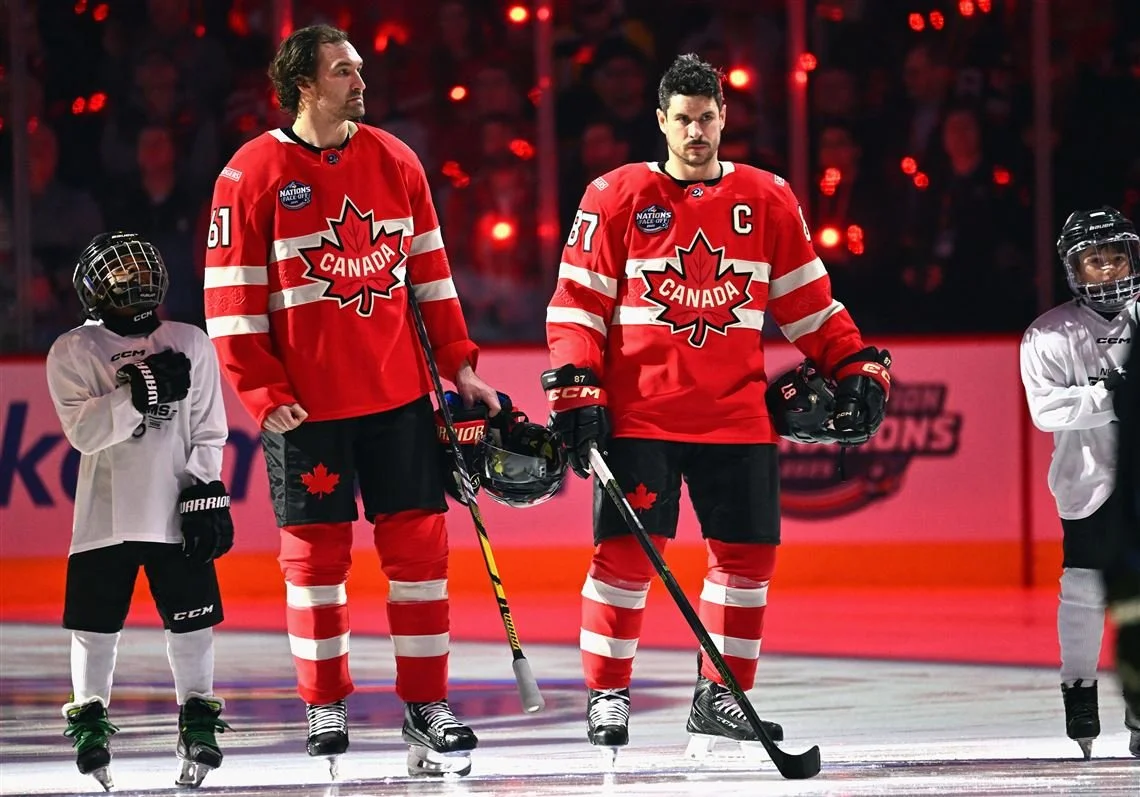
A three-time Stanley Cup champion, the face of Canada’s 2010 and 2014 Olympic gold runs, a driving force on the 2026 Olympic roster, and a key part of the Canadian squad that lifted the 4 Nations Cup.
Plenty of players shine for a season, grab a headline, or have their moment under the lights…
But Crosby has lasted for a generation, and he doesn’t look like he’ll be slowing down anytime soon.
He has averaged over a point per game in nearly every season of his career, proving that preparation translates directly into performance.
What sets him apart isn’t just his raw talent, but the focus he’s trained just as deliberately as any other physical skill.
So how has Crosby managed to stay at the top for nearly two decades?
Let’s take a closer look…
The Mind’s Warmup
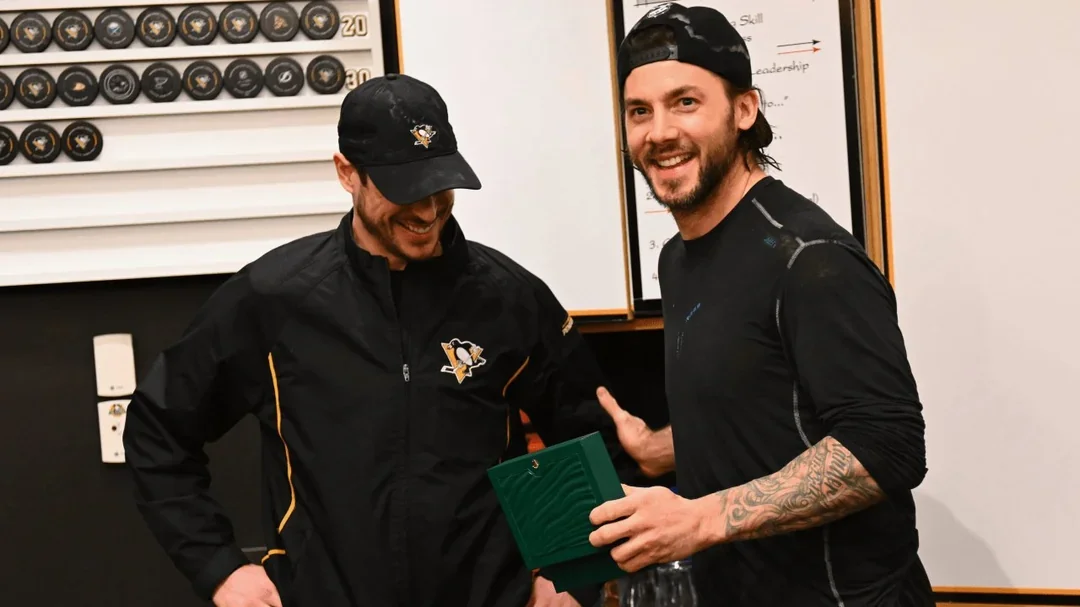
Crosby’s routines are legendary.
Before the game even starts, he’s visualizing puck battles, rehearsing escapes, and scanning options in his head.
He once explained:
“For me, I’ve learned that the best thing is to focus on the team you play for and yourself and what you need to do.”
That mindset bleeds into every part of his preparation.
His pre-game is famously ritualistic… built for control and consistency.
At the rink, he makes his own peanut butter and jelly sandwich, always laces his left skate before his right, and tapes his sticks with meticulous care (no one else is allowed to touch them).
He even takes a specific route to avoid passing the visitor’s locker room.
Every detail signals his brain: it’s game time.
He layers physical routines with mental ones.
A pre-game soccer kick-around loosens his body, while process goals, small, specific objectives in practice, like a clean hand position or letting go of an error, instantly sharpen his mind.
Even his napping, his custom gear, and his habit of avoiding family phone calls on game day are rooted in one principle: focus through control.
For Crosby, these details aren’t superstitions. They’re the structure that prepares his mind as much as his body.
By the time he takes his first shift, Crosby has already rehearsed the game in body and mind.
A study in the Journal of Applied Sport Psychology found that athletes who rehearse situations mentally react faster and make sharper decisions under pressure.
Crosby is the living example.

The Habits That Separate Him
1. Mental Prep Before the Game
When Crosby laces up, his mind is already primed. He’s visualized pressure on his hip, the wall battle, and the high-danger read at the blue line.
Skills coach Enio Sacilotto calls it the “eyes up, scan the ice, know your next play” habit. Crosby has turned that coaching cue into instinct.
2. Trigger Cues
Every elite player has switches. Crosby’s are subtle: a phrase under his breath, a routine gesture, but they act like a light switch, snapping his brain into compete mode instantly.
Former teammate Pascal Dupuis once said Crosby’s focus stood out most in practice: “Sid doesn’t waste a rep. Every drill, every touch, he’s locked in. That’s why he plays the same way in games — because he’s already done it a thousand times in practice.”
3. Technical Breathing
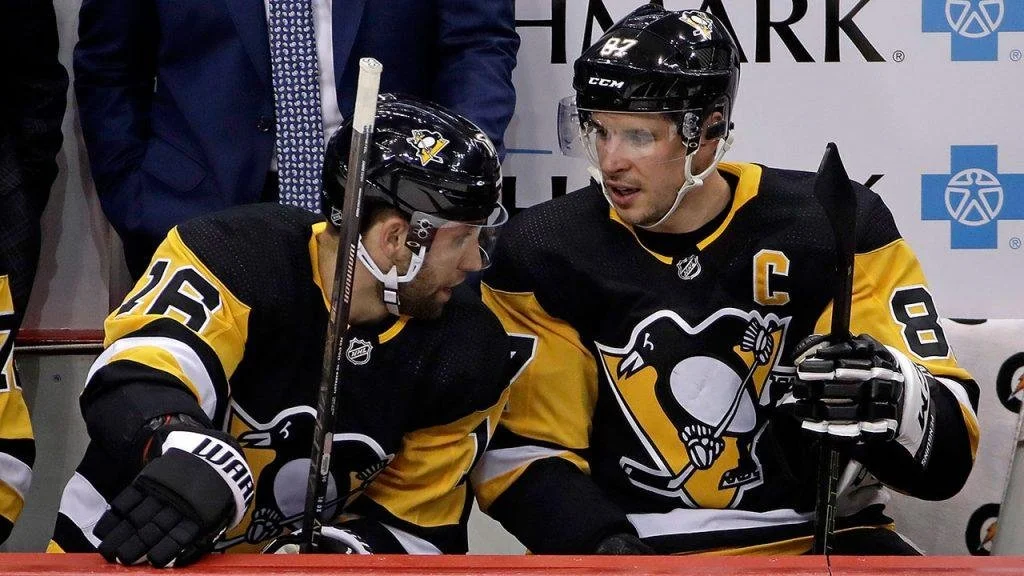
On the bench, watch the shoulders drop and the slow exhale. That’s not Crosby displaying his exhaustion from his last shift. That’s his way of showing his focus.
Breathing patterns like box breathing (inhale 4, hold 4, exhale 4, hold 4) regulate the nervous system. Harvard studies show they sharpen decision-making under stress. Crosby uses them between shifts to stay sharp.
4. Visualizing the Hard Moments
When he closes his eyes during games, he isn’t picturing trophies and accolades. He’s picturing the grind in real-time… puck protection in the corner, a recovery after a turnover, a slick escape off a forecheck. He rehearses the messy details so they feel automatic under pressure.
5. Resetting After Mistakes
Everyone makes errors. Crosby just doesn’t stay in them. A few deep breaths, some words of positivity to motivate the bench, a shin pad tap… his way of clearing the last shift before the next begins. Coaches call these reset habits. They keep him neutral, not emotional.
What the Data Shows
Harvard Health Publishing reports that techniques like deep breathing and visualization can reduce stress, improve reaction time, and enhance composure under pressure.
Crosby embodies it.
Across 1,200+ NHL games and every international tournament he’s touched, his consistency has been defined not just by talent but by trained focus.
That’s why, even after two decades in the league, he continues to deliver internationally, from Olympic gold to Canada’s 4 Nations triumph.

Why Coaches Trust Him
Ask any NHL or international coach why Crosby is still leaned on in his late 30s, and the answer is always the same: trust.
They know he’ll show up in every situation.
From the opening faceoff, the penalty kill, or the final minute of a one-goal game.
His habits never drift.
His focus never dips.
That reliability is why he continues to earn the biggest minutes in the biggest moments.
Training the Invisible
The best part?
These habits aren’t just reserved for Olympians and NHL superstars.
Minor hockey players can start them now.
One trigger phrase. Two minutes of breathing. One reset cue. That’s Crosby’s system… scaled for you.
Pick a Trigger Cue — a word, gesture, or routine that flips your switch before each shift.
Breathe With Purpose — two minutes of box breathing pre-game or after mistakes.
Visualize One Situation — rehearse pressure and your response, not just the highlight play.
Create a Reset Habit — a small action that clears mistakes instantly.

The Closing Lesson
Let’s go back to the opening question:
What separates the players who show up every night from the ones who disappear when it matters?
Sidney Crosby’s illustrious career has given us the answer.
His career, from rookie phenom to three-time Stanley Cup Champion, is built not only on talent, but on focus trained like a muscle.
Routines. Cues. Breathing. Visualization. Resets.
Talent will get you noticed.
Focus will keep you trusted and on the ice when it matters most.
Ignore it, and you leave shifts on the table.
Train it, and you’ll be ready to compete every night, just like Crosby.
Talon Mills
Up next in the PDA Newsletter
Coming Thursday: The 10-Year View
We’ll look at why player development is rarely a straight line.
Growth comes in bursts, setbacks, and unexpected leaps, and the players who last are often the ones who stay patient through the dips.
For parents, it’s a reminder that progress isn’t always about where your child is today, but where steady habits can take them over the next decade.
