
The PDA Newsletter | Recovery Habits

What if getting better wasn’t about pushing harder, but learning to rebuild with purpose in the moments after the push?
Every young player wants to push harder to unlock the next level…
More ice. More reps. More gym time.
Somewhere along the way, “doing more” starts to feel like the only path forward…
But there’s a truth every professional eventually learns… often the hard way:
Training breaks you down. Recovery builds you up.
That isn’t an opinion. It’s physiology.
High-intensity training creates muscle damage, nervous system fatigue, and hormonal stress.
Adaptation only happens if the body is given the chance to rebuild.
The best players in the world aren’t just great workers…
They’re great recoverers.
And that’s where real growth actually happens.
Let’s jump in…

The Habits That Separate the Pros
Across the NHL, the players who stay consistent through the grind of an 82-game season don’t credit extreme training or endless extra reps in the gym.
They credit the fundamentals.
Elite players protect the same core habits — sleep, hydration, mobility work, and time to decompress after games.
Nothing glamorous.
Nothing complicated.
Just disciplined routines executed away from the spotlight.
It’s a pattern you see everywhere in high-performance environments:
Matthew Tkachuk is known for protecting his sleep deep into playoff runs.
Nathan MacKinnon approaches recovery with the same intensity he brings to his on-ice sessions.
Sidney Crosby, even early in his career, structured his evenings around rest and routine to stay sharp.
These players don’t stumble into consistency.
They build it deliberately, through habits aligned with how the body actually adapts to stress.

1. Sleep: The Most Underrated Performance Booster
Sleep is where development locks in.
It’s when:
Muscles repair
Movement patterns strengthen
Energy is restored
Reaction time sharpens
During deep sleep, growth hormone release peaks — a key driver of muscle repair and physical adaptation (Van Cauter et al.). At the same time, the brain strengthens neural pathways associated with skill execution, meaning your body literally “locks in” what you practiced the day before (Walker, 2017).
Not getting enough sleep doesn’t just make you tired…
It makes you slower, foggier, and easier to beat.
What elite players prioritize:
Longer sleep durations
Consistent sleep/wake times
Reduced screen use before bed
Cool, dark, quiet sleep environments
What you can do today:
Set a real bedtime — and stay as consistent as possible.
2. Hydration: Fuel for the Brain, Not Just the Body
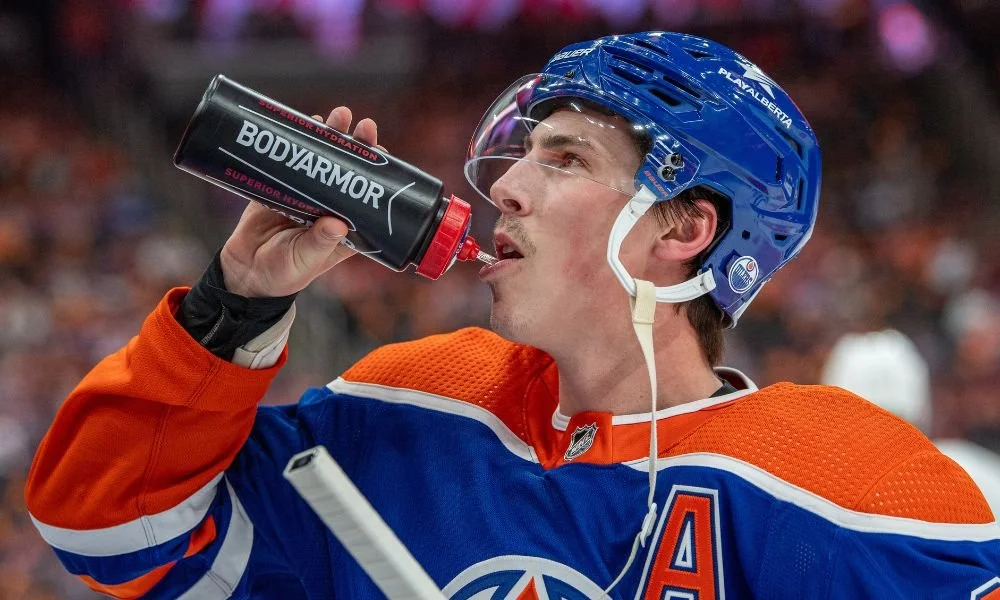
Research shows that even 2% dehydration, barely enough to notice, can impair reaction time, coordination, and decision-making (Bandelow et al.).
That’s one bad hydration day…
Many players think they’re tired from training, when they’re actually under-fueled at the cellular level. The brain is especially sensitive to hydration status, which means reads get slower long before legs feel heavy.
What pros focus on:
Hydration throughout the entire day
Electrolyte replacement after intense sessions
Drinking proactively, not reactively
What you can do today:
One bottle of water every 60–90 minutes on training days.
3. Mobility & Soft Tissue: Preserving Performance Over Time
Tight hips shorten stride length.
Tight quads pull at the knees.
Tight backs limit rotation.
Mobility isn’t just injury prevention…
It preserves movement efficiency.
Regular mobility and soft-tissue work improves joint range of motion and blood flow, helping deliver oxygen and nutrients to recovering muscles while reducing neuromuscular tension (Behm & Chaouachi).
Professional example:
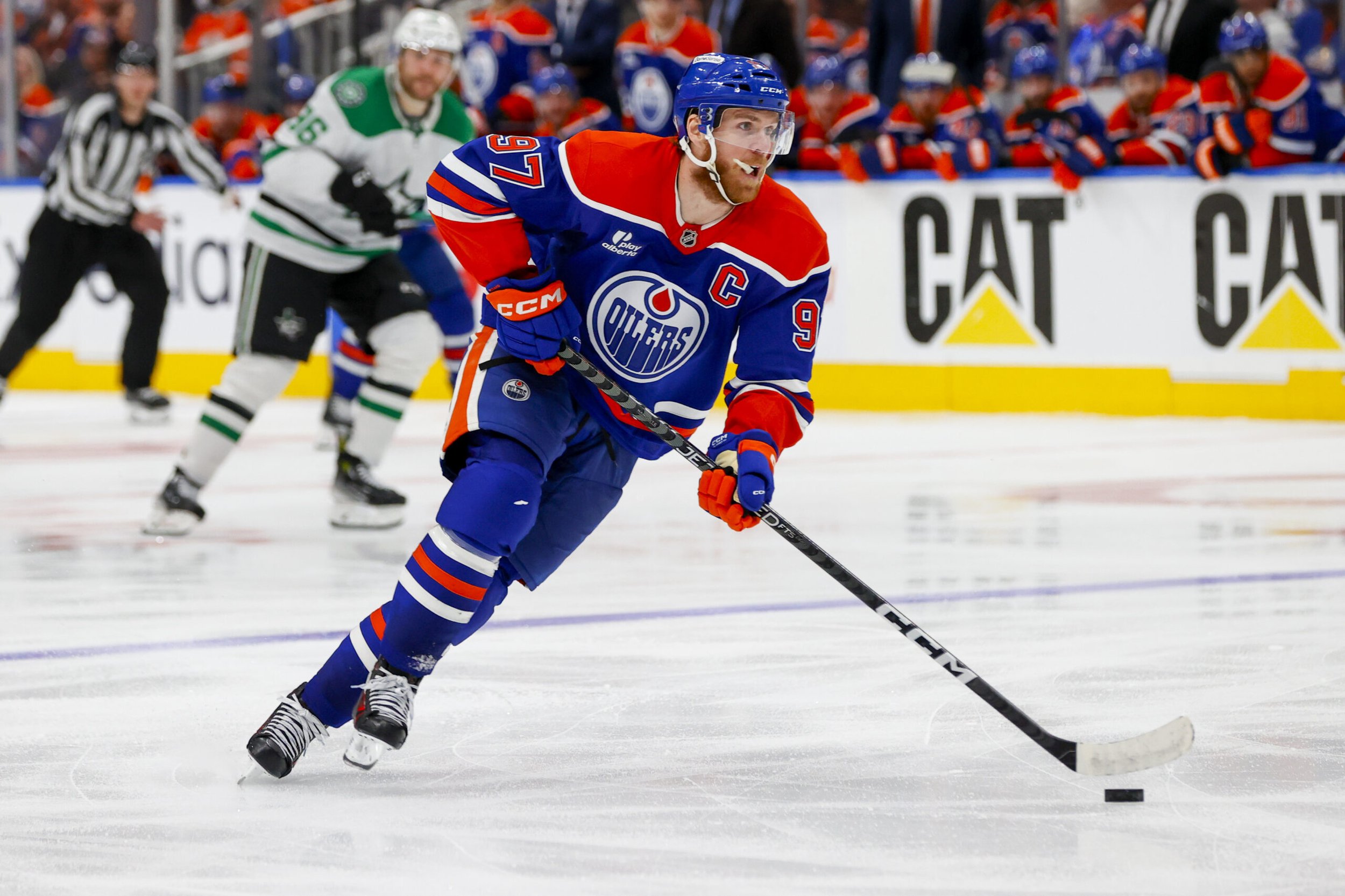
When Connor McDavid rebuilt his stride after knee surgery, speed wasn’t the first priority. Restoring movement quality was. Once the foundation was rebuilt, speed followed naturally.
What you can do today:
Five to ten minutes of mobility or foam rolling after practice or a workout.
That alone can reduce soreness and keep movement patterns clean across a long season.
4. Mental Cooldowns: Resetting the Nervous System
Burnout doesn’t begin in the legs.
It begins in the nervous system.
High-level competition elevates cortisol and keeps the body in a constant state of “fight or flight.” Without intentional recovery, stress accumulates, even if training volume stays the same (Selye, stress adaptation theory).
Controlled breathing has been shown to activate the parasympathetic nervous system, lowering heart rate and stress hormones while accelerating recovery. (Sakakibara et al.).
That’s why elite players don’t immediately stack stimulation after games…
They slow down.
They breathe.
They reflect briefly, then disconnect.
Pro insight:
Many NHL players now use guided breathing on team buses and flights after games. Not to relax, but to reset faster so the next day feels lighter.
What you can do today:
Five seconds in, five seconds out.
Two minutes after games.
Massive results to calm the mind and body post-stress.

5. Fuel the Window: Turning Training Into Adaptation
After training, the body enters a brief window where muscles absorb nutrients more efficiently. Pairing carbohydrates with protein during this time helps restock energy stores and repair muscle, turning the work you just did into progress.
Elite players treat post-training nutrition as a non-negotiable. Not because it’s exciting, but because they understand how progress compounds. One good decision doesn’t move the needle. Repeating the right decision after every session does.
What you can do today:
Prioritize a simple post-training meal or snack with carbohydrates and protein.
It doesn’t have to be fancy.
It just has to happen consistently.
Concluding Thoughts
Training provides the stress…
Recovery determines the adaptation.
The players who improve fastest aren’t doing more.
They’re allowing the body and mind to fully absorb the work.
That isn’t easing up.
It’s how the body is built to adapt.
And once you understand that, recovery stops feeling optional…
and starts becoming the skill that makes everything else work.
Talon Mills
