
The PDA Newsletter | Ethan Moreau Case Study
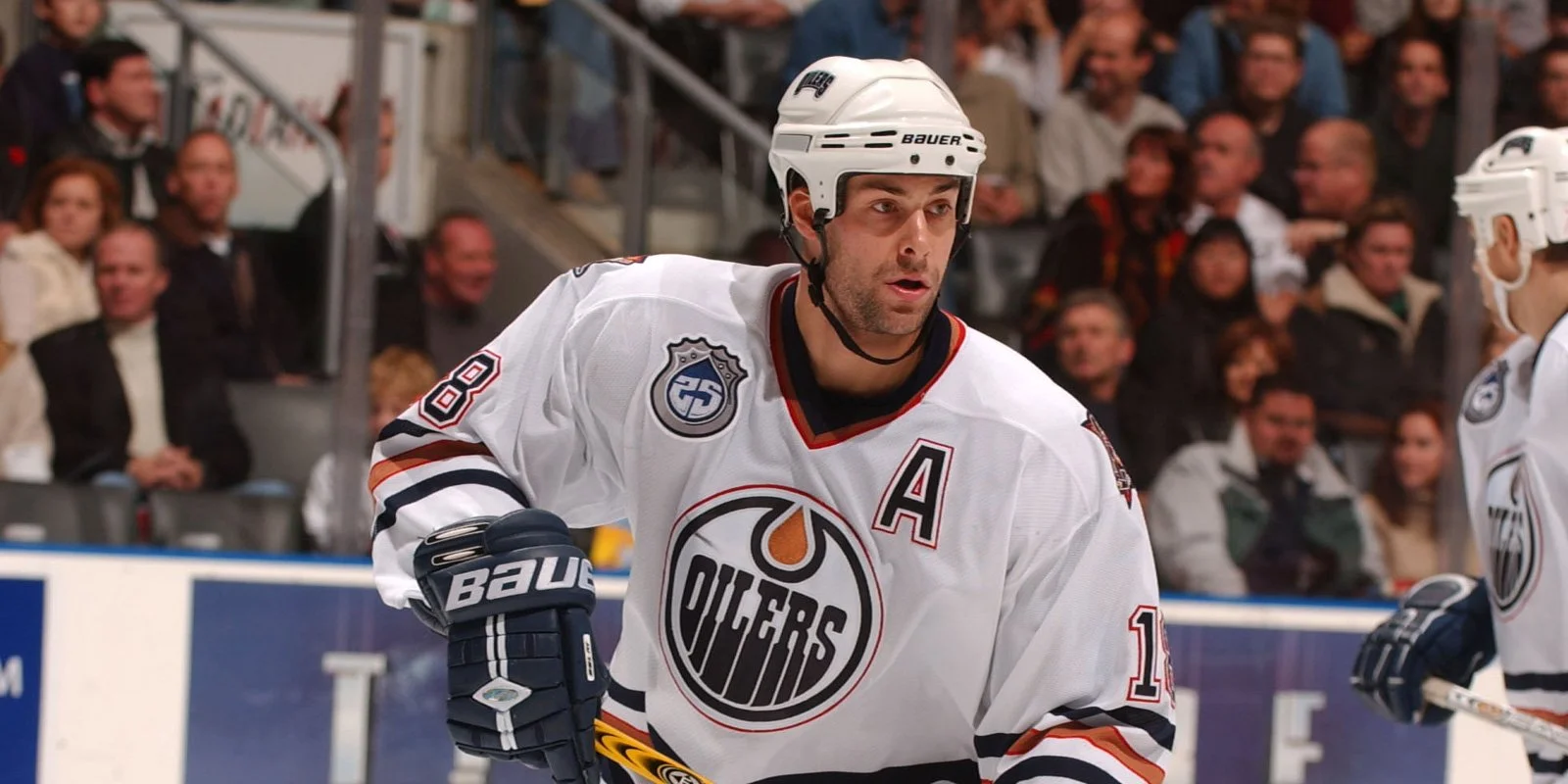
What if your role wasn’t to shine… but to lead?
He was a first-round pick.
A top-line scorer in junior.
A 98-point force who bullied his way through the OHL with first-round offensive tools, power, and the confidence of a player who never had to wonder if he belonged.
But the version of Ethan Moreau that dominated in Niagara Falls didn’t survive the NHL.
For some players, the transition is a steady ascent; skill scales up, opportunity expands, and the role they’ve known since childhood follows them into the pros.
Moreau didn’t get that road…
He got the harder one; the one that forces you to confront who you are when your old identity stops working.
Some players hold on tighter to the player they once were…
Others evolve.
This is the story of the latter: a player who didn’t lose himself, he rebuilt himself.
Let’s find out how…
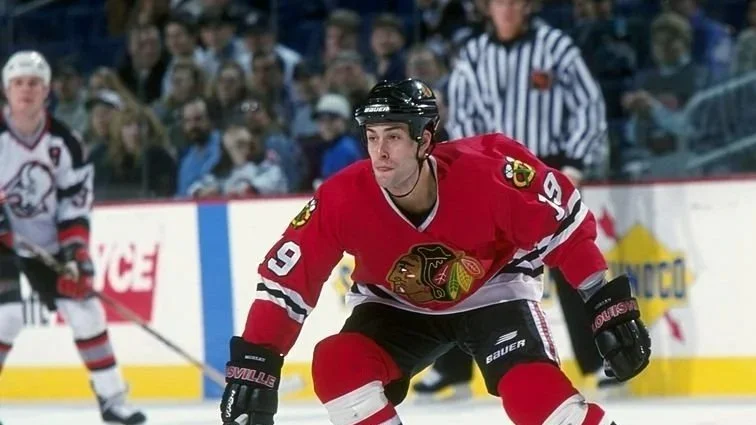
Draft Pedigree to Reality Check
Moreau entered the NHL with every reason to believe his offense would translate…
Chicago took him 14th overall because he was big, strong, and productive; a modern power forward with all the projectable tools teams chased in the mid-90s.
On paper, his path looked straightforward…
But the pros were ruthless.
Chicago’s lineup was already built around established scorers; players older, smarter, and faster in the ways that separate the NHL from every level beneath it. Roles were locked in. Minutes were spoken for. And the league doesn’t slow down to make room for a prospect’s résumé.
For a young player, that’s usually when frustration creeps in.
For Moreau, it sparked something different… a moment of clarity.
He looked around the room, took stock of the roles already carved out, and recognized that the version of himself he arrived with might not be the version that would keep him in the league. Instead of forcing a scoring identity that no longer fit, he focused on where he could make an impact.
It’s a point most players never reach: separating ego from opportunity, expectations from reality.
Moreau didn’t cling to an identity that wasn’t going to exist at the NHL level.
He reshaped it, and that decision changed everything that came next…
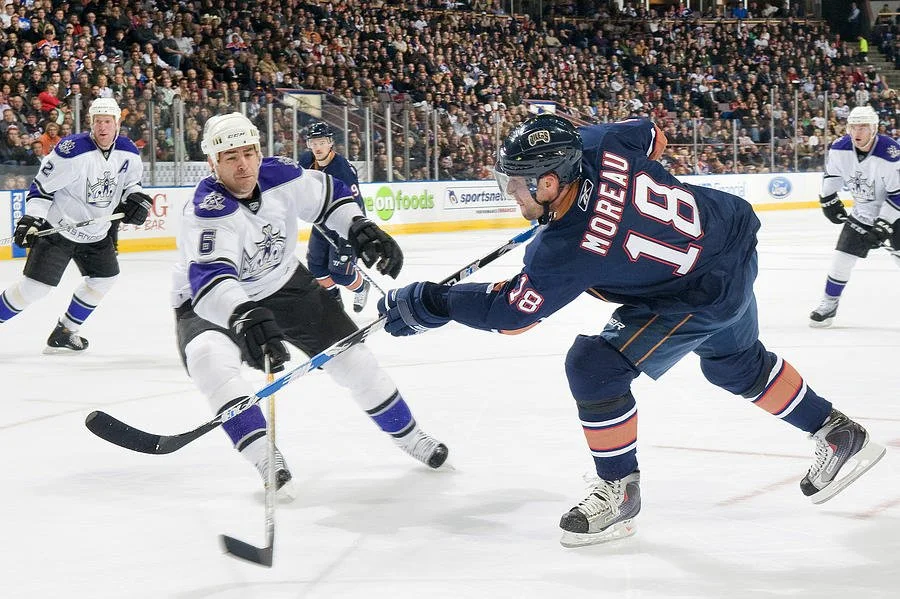
The Shift in Identity
His evolution wasn’t subtle…
And it was far from soft.
He committed to the parts of the game that demand pain, discipline, and an unshakable willingness to work when no one is watching:
Battles that sap your lungs
Forechecks that set momentum
Blocks that bruise bone
Penalty-kill reads that require trust from the bench
Effort that builds credibility, shift after shift
These weren’t “intangibles.”
They were intentional choices, the parts of the game where effort becomes influence.
By the time he arrived in Edmonton, Moreau wasn’t a player searching for a role…
He was a role. He became the forward you leaned on when the game tilted into the trenches, when emotion mattered more than space, when coaches needed predictability under pressure.
“He played hard. Every shift,” said former teammate Jason Smith.
“Didn’t matter if it was October or Game 7.”
Moreau didn’t just accept those hard minutes.
He demanded responsibility with every shift he took.

Wearing The Letter
Edmonton didn’t give out leadership lightly…
Before Moreau ever wore the C, he was the standard… a presence you noticed in the way he practiced, prepared, and held teammates to the same bar he set for himself.
His leadership showed up in the details, the habits that never changed, no matter the day or the score.
Across 11 seasons in Edmonton, he became the heartbeat of a locker room built on accountability, resilience, and unapologetic effort. His impact went beyond his minutes; it helped define what that era of Oilers hockey felt like.
He helped anchor the blue-collar group that fought its way to the 2006 Stanley Cup Final — one of the grittiest, most unlikely runs of the modern era. He became the kind of player who could drag a room into belief.
In 2007, the Oilers made it official and named him captain.
“He meant a lot to that room,” said GM Kevin Lowe.
“Guys followed him for a reason.”
And it wasn’t because he fit the NHL stereotype of a captain…
He wasn’t the superstar.
He wasn’t the leading scorer.
He wasn’t the shutdown No. 1 defenseman.
He was something even more rare, a player respected across the league for how consistently he showed up, how hard he played, and how firmly he held the standard inside the room.
The captaincy reflected the trust he’d earned through years of hard minutes and dependable habits, the kind of credibility teammates feel long before it’s official.
Even as injuries piled up and the roster shifted into a rebuild, his example never softened.
His impact on the game stayed intact; a steady presence fans remember, teammates admire, and opponents always felt.
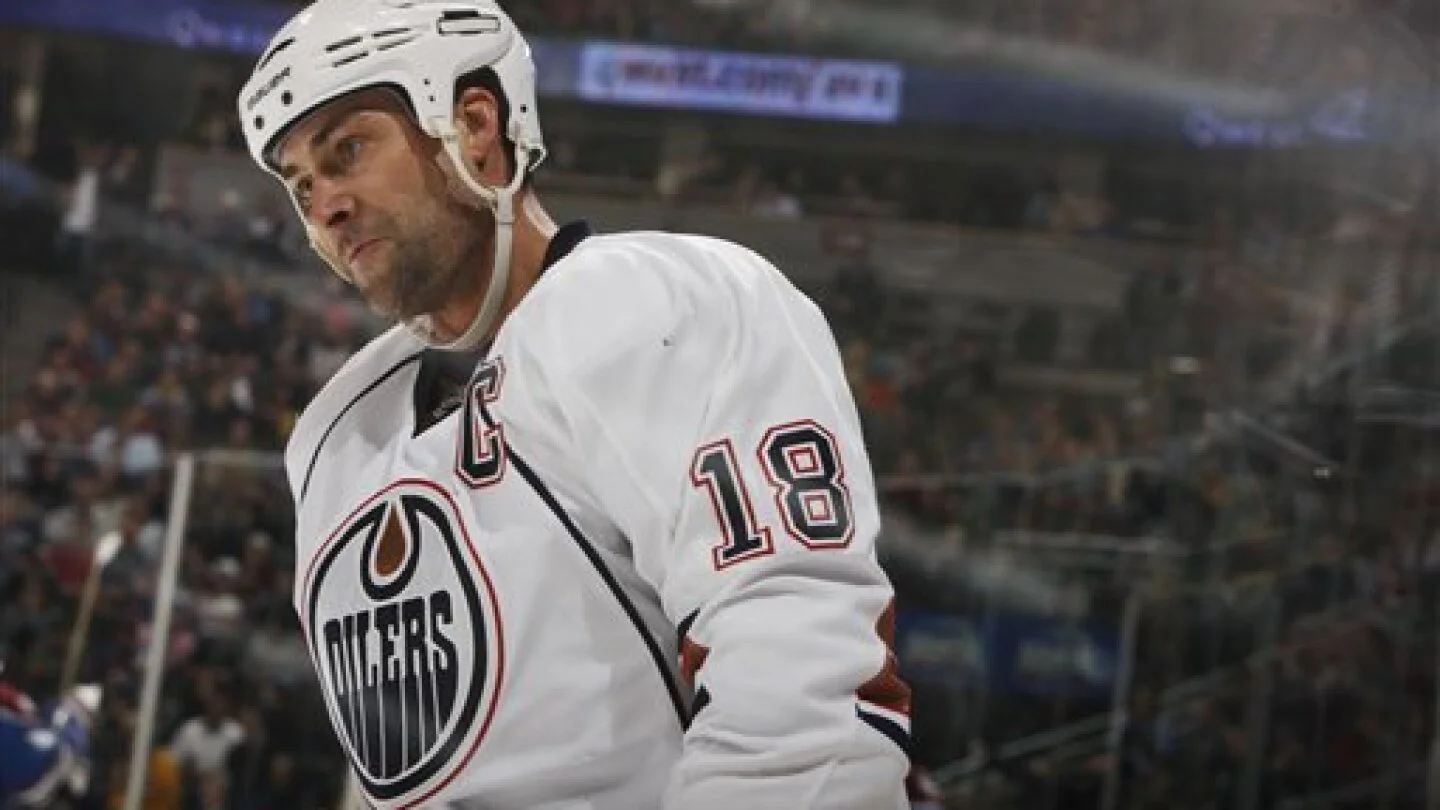
The Player He Became
Ethan Moreau didn’t become the scorer his draft position predicted…
He became something more enduring, and far more difficult to replace.
928 NHL games across 16 seasons
Captain of the Edmonton Oilers (2007–2010)
Stanley Cup Finalist (2006)
King Clancy Award Winner (2009)
A premier penalty killer, matchup winger, and culture carrier
A blue-collar pro who extended his career through identity and pure grit
Moreau built a reputation not on numbers, but on reliability. Coaches trusted him with defensive starts, heavy minutes, closing shifts, and the emotional tone of the bench.
What Players Can Learn from Moreau
1. Your value might not match your past, and that’s okay.
Junior success doesn’t always guarantee NHL success. Moreau adapted before frustration ever had a chance to sink in.
He understood this truth early:
Value is found where the opportunity is, not where you wish it was.
2. Reinvention is a competitive advantage.
Players who stay the same eventually get passed by.
Players who evolve last.
Moreau didn’t see reinvention as defeat, he saw it as survival.
3. There’s more than one way to matter.
Not every identity is built around point production. Some careers are anchored in grit, reliability, presence, and professionalism.
Moreau mattered in ways most fans heavily respect and every coach deeply values.
4. Leaders show up the same way, every day.
His captaincy wasn’t about speeches or fanfare. It was about consistency, example, and unshakable belief in doing the hard things right.
Leadership wasn’t just something he earned…
It was something he practiced, night after night.
So, what if your role wasn’t to shine… but to lead?
Moreau entered the league with a scorer’s past, but life at the highest level revealed a different shape to his future.
He found purpose in the shifts that required resilience, in the habits that stabilized teammates, in the grit that spoke louder than any box score ever could.
His story became a reminder that growth often lives where expectations end…
He released the version of himself he once thought he had to be and stepped toward the one he was meant to become.
He didn’t stay loyal to an old script…
He wrote a new one.
And in that choice, his legacy took shape.
Actionable Advice:
If you’re in a role that doesn’t match your past, ask yourself:
Am I holding onto an old identity… or becoming the player the moment demands?
Growth starts the moment you’re willing to evolve.
It’s a superpower… the trait that turns prospects into pros and pros into leaders.
Be the player who evolves.
Be the player a coach trusts.
Be the player every team needs when games turn heavy.
Talon Mills
